
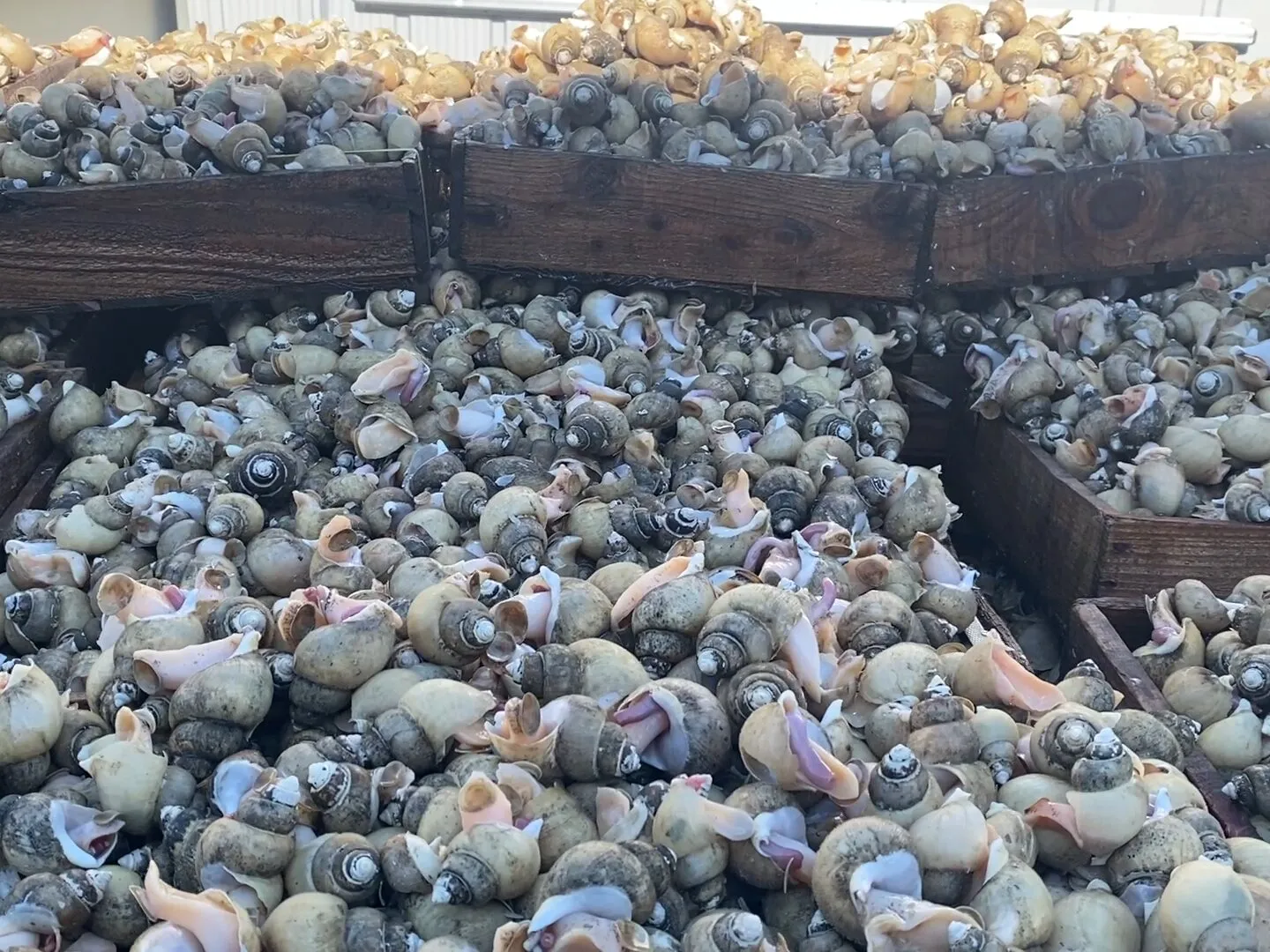
Step 1
Intake & inspection
Incoming seafood and other ingredients are checked for freshness and foreign matter.
Seven steps take place at the Ganggu plant, from raw-material intake to dispatch. Preparation methods and sterilisation conditions vary with the raw material, and we’ll explain the conditions for your product when you enquire.
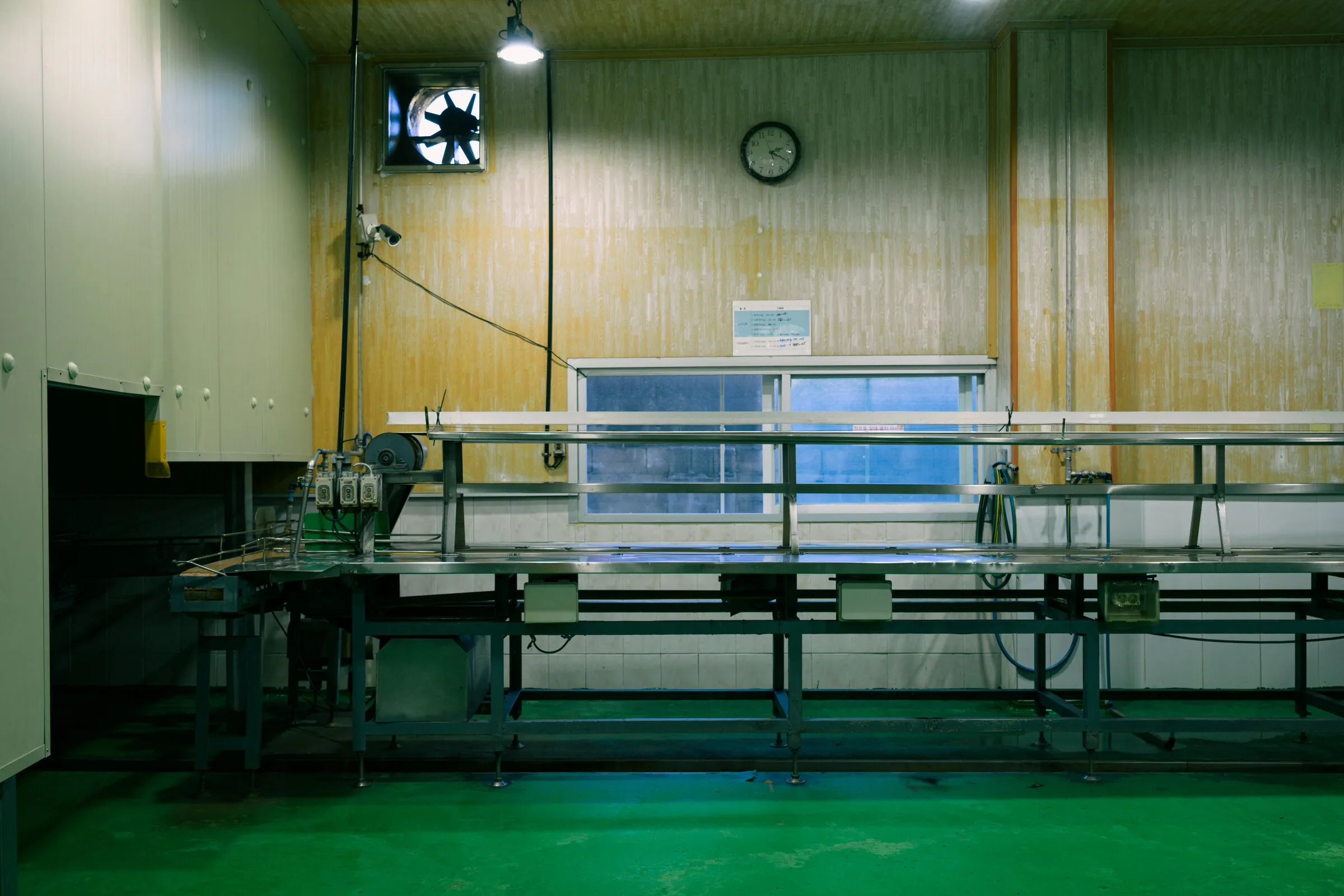
Step 1
Incoming seafood and other ingredients are checked for freshness and foreign matter.
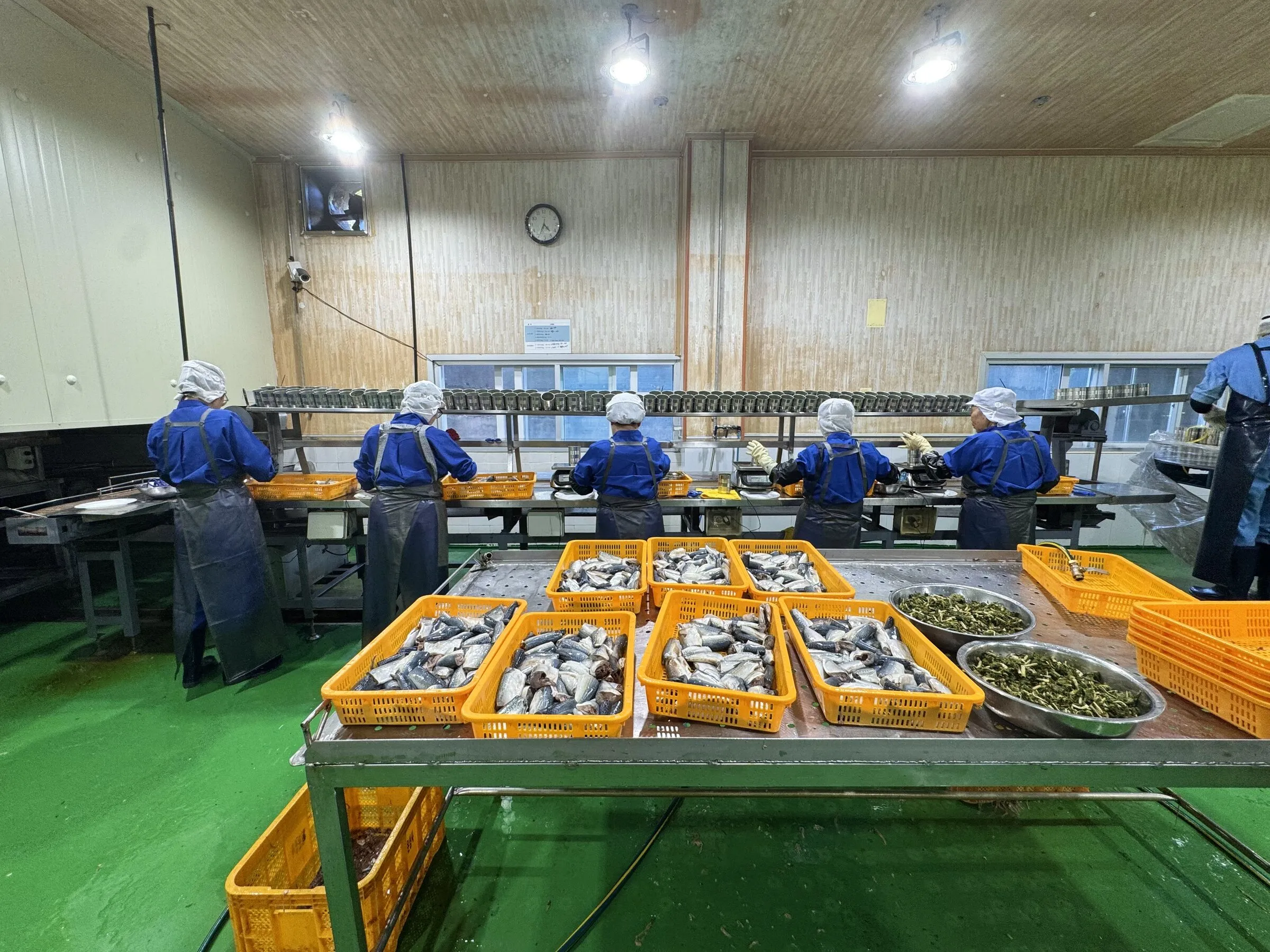
Step 2
Raw material is washed and prepared for the product. Whelk, saury and mackerel each need different handling.
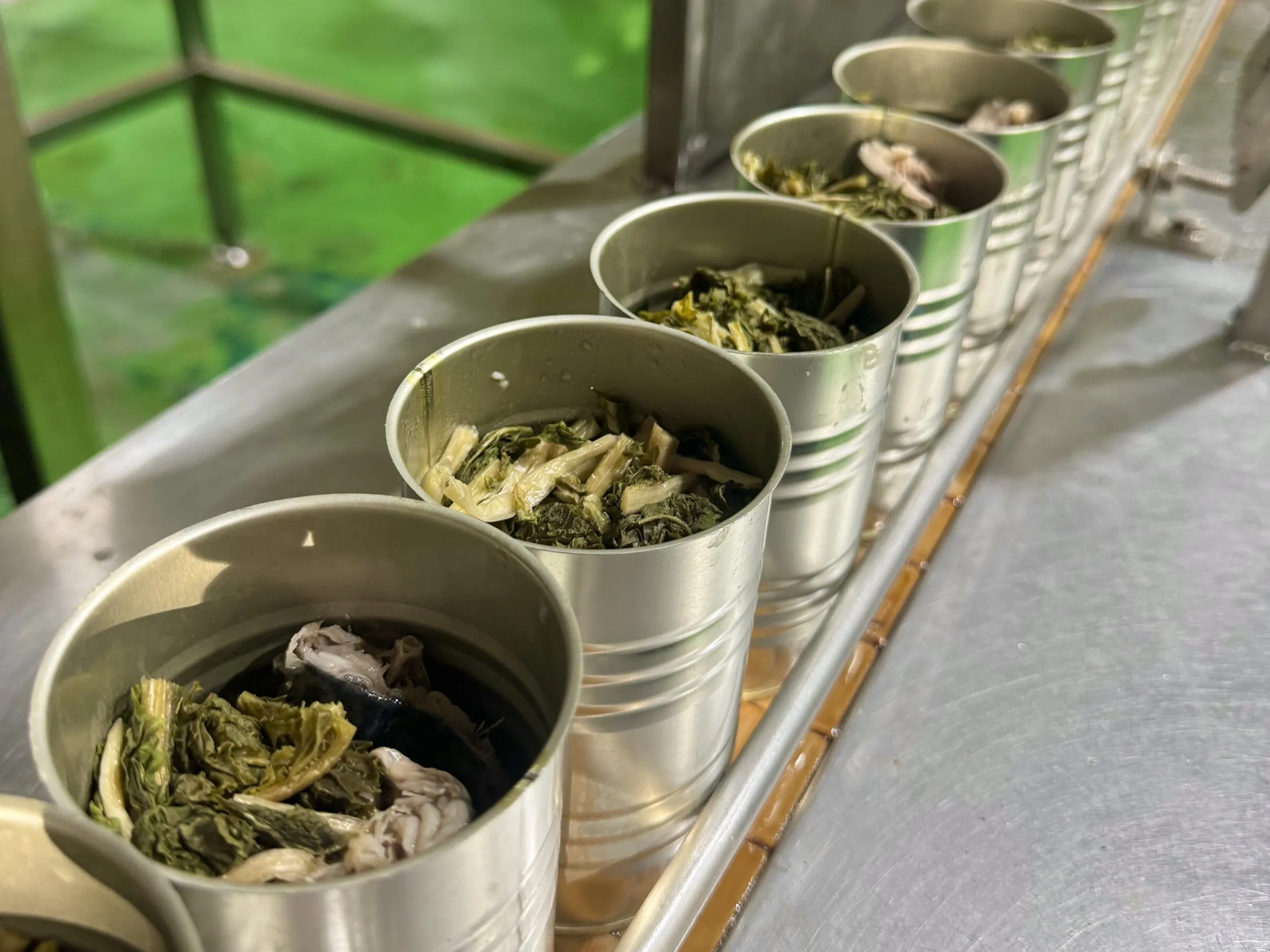
Step 3
Raw materials, other ingredients and seasoning liquid are weighed to the formulation and filled into cans.
Step 4
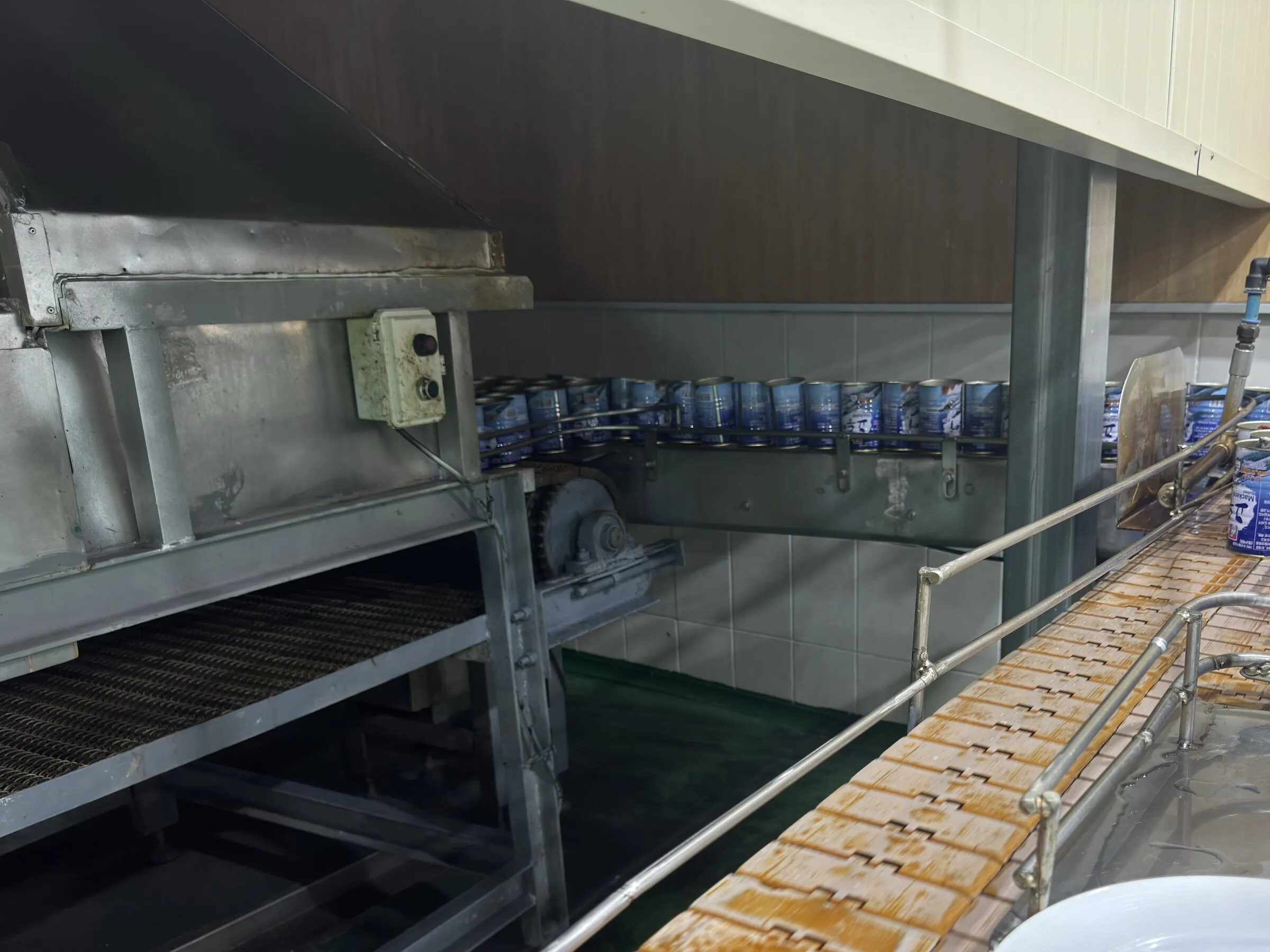
Air is removed from the can and the lid is double-seamed.
Step 5
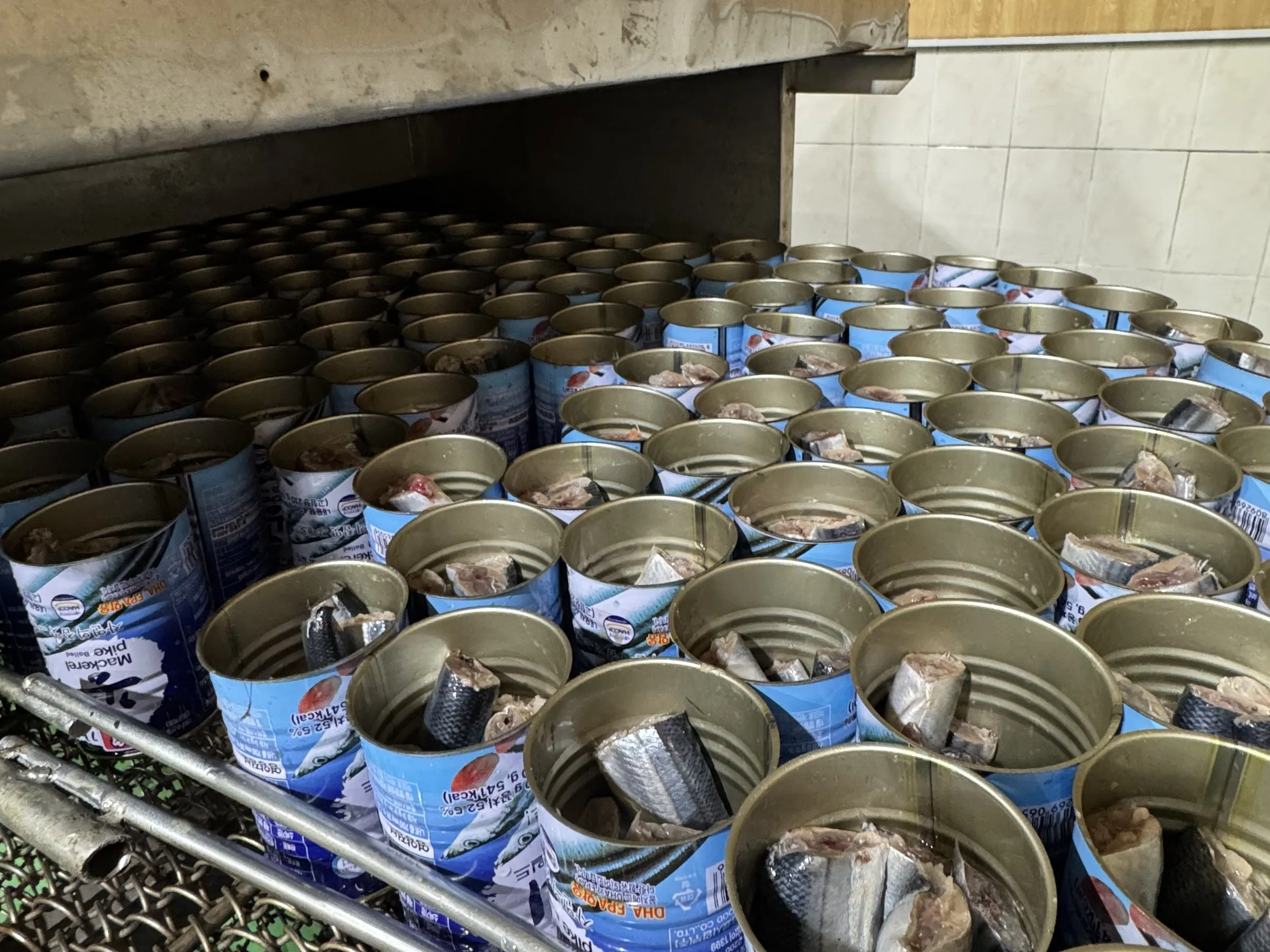
Sealed cans are sterilised under heat and pressure. Time and temperature are set for each product.
Step 6
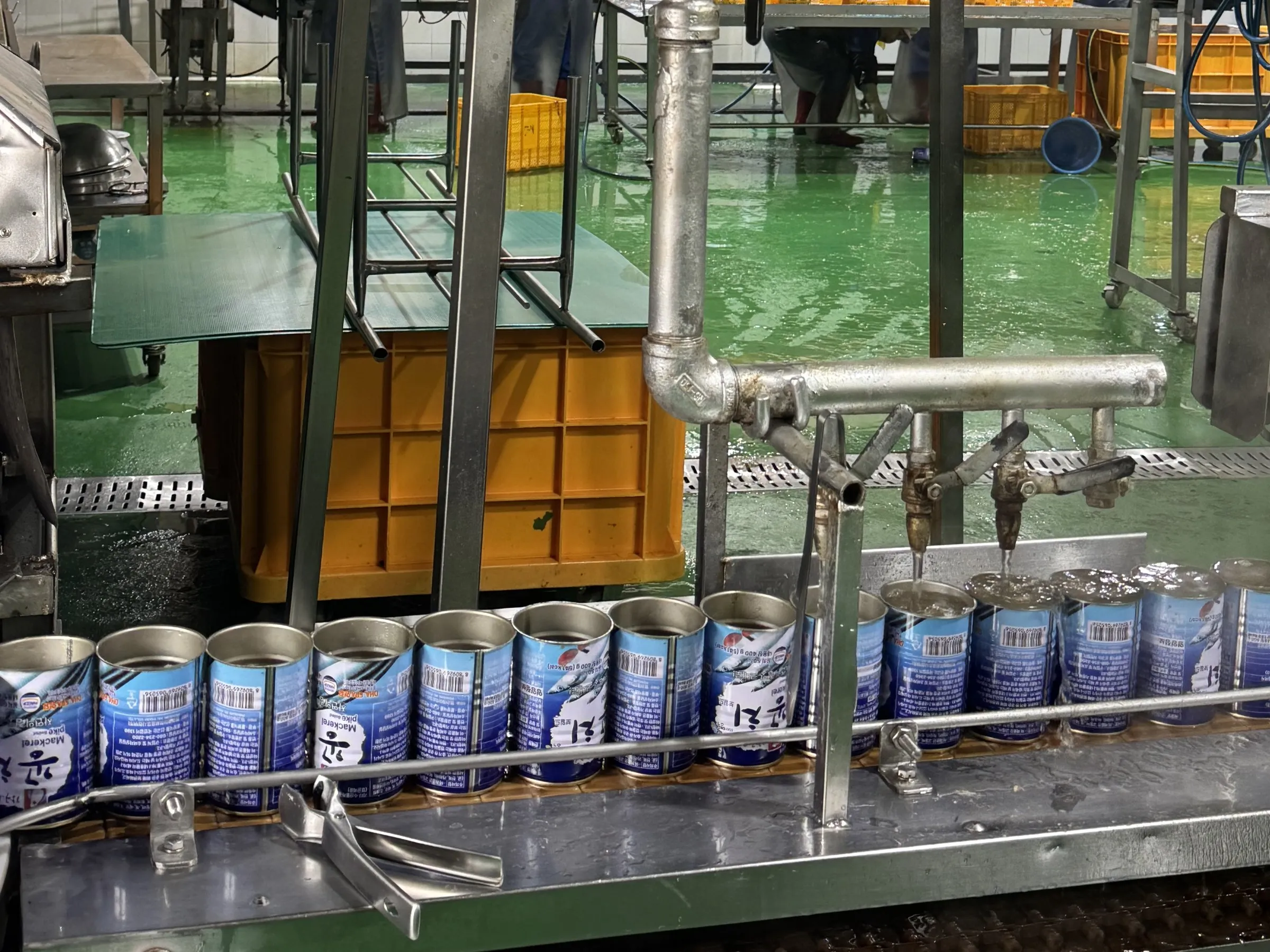
Sterilised cans are cooled, then checked for external and seam defects, and faulty cans are removed.
Step 7
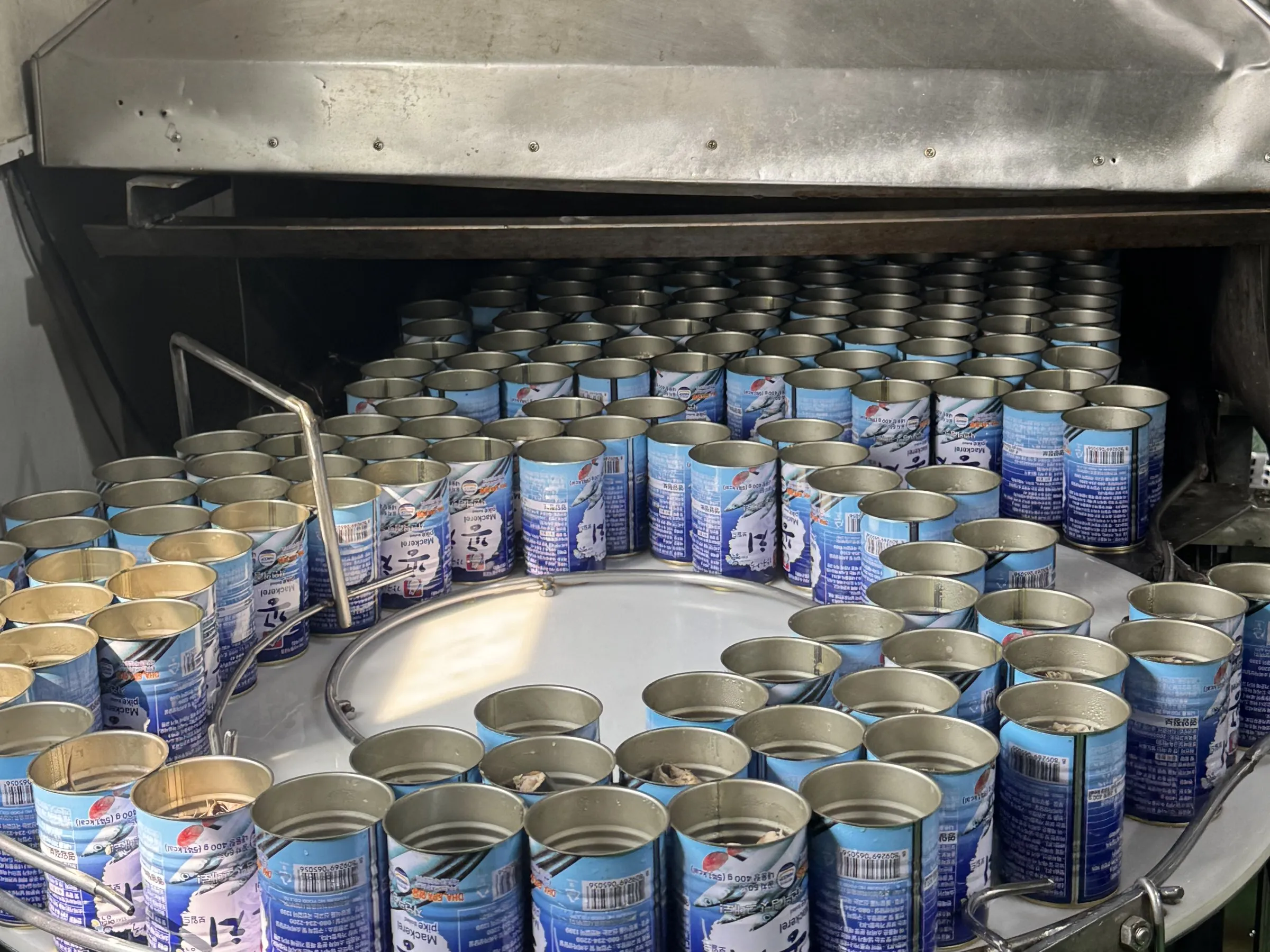
Label copy is checked, labels are applied, and cans are packed into cases for dispatch.
Production takes place at a HACCP-certified plant.
Process records are kept by production date, so the production history of each product can be checked.
In line with HACCP operating standards, the sterilisation temperature and time for each product are recorded and kept for every batch.
Tell us the raw material, recipe, can size and expected volume. Our CEO will review it and tell you whether we can produce it.